Introduction
Working out with gym equipment can accelerate your fitness progress, but improper use can lead to injury or stalled results. Whether you’re a beginner or seasoned gym-goer, understanding how to set up, execute, and maintain good form on each machine or tool is essential. This guide walks you through key principles and best practices to help you train smart, stay safe, and get the most out of every session.
https://www.lifelinefitnessclub.com/how-to-use-gym-equipment-safely-and-effectively/
1. Prepare Before You Train
- Warm Up Thoroughly
• Begin with 5–10 minutes of light cardio (e.g., brisk walking, stationary bike) to raise your heart rate and increase muscle temperature.
• Follow with dynamic stretches — leg swings, arm circles, torso twists — to mobilize joints and improve range of motion. - Familiarize Yourself with the Equipment
• Read instruction placards often affixed to machines.
• Watch a quick demonstration (many gyms have staff or screens).
• If unsure, don’t hesitate to ask a trainer for a quick rundown of seat adjustments, safety pins, and proper grip. - Set Appropriate Resistance/Weight
• For machines, start at a very low weight and do a test rep to check smoothness of movement.
• For free weights, choose a load where you can complete 8–12 reps with good form — your last rep should feel challenging but doable.
2. Machine Equipment: Tips for Safe, Effective Use
A. Selectorized Machines (e.g., Leg Press, Chest Press)
- Adjust Seat and Pads
• Ensure your joints align with the machine’s pivot point (knee with knee pad, shoulder with shoulder pad).
• Keep a slight bend in elbows or knees at full extension to avoid joint lockout. - Control the Motion
• Move deliberately — avoid jerky starts or letting the weight slam down.
• Use a 2-count lift, 1-count hold, 2-count return tempo. - Breathe Properly
• Exhale on the exertion (pushing/pulling), inhale on the return.
B. Cable Machines and Functional Trainers
- Check Cable and Attachment Integrity
• Look for frayed cables, loose carabiners, or worn handles.
• Report any damage to gym staff immediately. - Use Handles and Attachments Correctly
• Swap attachments (rope, straight bar, handles) for specific exercises — e.g., triceps rope for press-downs, D-handles for rows.
• Stand with feet staggered for single-arm or high-pull movements to maintain balance. - Maintain Core Engagement
• Brace your abs and glutes — tension through your core protects your lower back during cable chops, woodchoppers, and similar anti-rotation drills. - https://www.lifelinefitnessclub.com/how-to-track-fitness-progress-beyond-the-scale/
3. Free Weights: Dumbbells, Barbells, and Kettlebells
- Start Light & Master Technique
- For complex lifts like squats, deadlifts, or presses, begin with just the bar (20 kg/45 lb standard barbell) or light dumbbells.
- Focus on joint alignment: knees tracking over toes, wrists stacked over elbows, neutral spine, and shoulders down/back.
- Use Safety Equipment
- Squat Racks: Always set safety pins at a height just below your lowest rep.
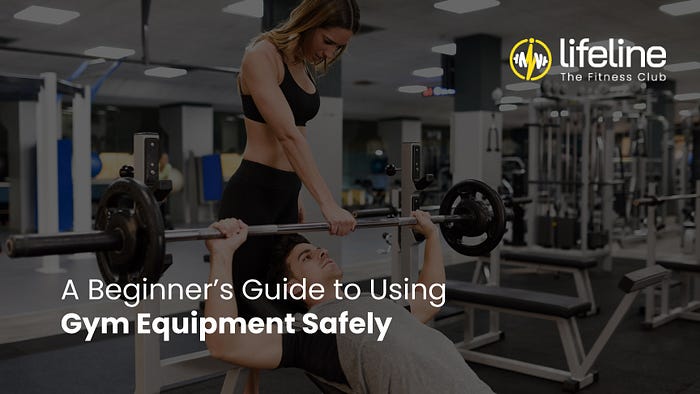
- Bench Press: Use spotter arms or have a gym buddy spot heavy sets.
- Kettlebells: Check handle and bell integrity, and swing with control — never let the bell crash against your forearm.
- Progress Gradually
- Follow the “two-for-two” rule: if you complete two extra reps for two workouts in a row, increase weight by the smallest available increment (2.5–5 lb).
- Recover and Reset
- After each set, step away from the rack or platform before changing plates or letting go of weights.
- Always re-rack dumbbells and barbells to keep walkways clear and prevent tripping hazards.
4. Cardiovascular Machines: Treadmills, Ellipticals, Bikes
- Check Settings Before You Start
• Confirm speed, incline, and program selection — accidentally high settings can lead to falls.
• Mount/touch both handrails when starting the treadmill; only let go once you have a steady pace. - Maintain Good Posture
• Keep shoulders relaxed, chest open, and core engaged.
• Avoid leaning heavily on rails — use them only for balance when changing intensity. - Monitor Intensity
• Use Rate of Perceived Exertion (RPE) or heart-rate zones to stay in your target training zone.
• Many machines have built-in monitors — wipe them down after use.
5. General Safety and Etiquette
- Stay Hydrated & Fuelled
- Drink water before, during, and after workouts.
- Have a small carbohydrate/protein snack 30–60 minutes prior if training hard.
- Wear Appropriate Attire
- Supportive footwear with non-slip soles.
- Breathable, moisture-wicking fabrics.
- Remove jewelry that could catch on equipment.
- Keep the Area Tidy
- Return attachments, dumbbells, and mats to their racks.
- Wipe down machines and benches with disinfectant.
- Listen to Your Body
- Sharp pain, dizziness, or joint clicking are warning signs — stop and assess.
- If in doubt, reduce intensity or seek professional guidance.
Conclusion
Mastering gym equipment safely and effectively comes down to preparation, proper setup, controlled execution, and consistent progression. By following these guidelines — warming up, learning machine mechanics, prioritizing form with free weights, and respecting your body’s signals — you’ll build confidence, improve performance, and minimize injury risk. Next time you step into the gym, keep safety and technique at the forefront, and watch your results accelerate.
Comments
Post a Comment